Cats

Personal Projects

And On That Farm – She Had Some Chicks

While I usually sew my own designs, occasionally a pattern speaks to me, and I just have to have it. I have always admired McKenna Ryan’s beautiful and intricate designs but never ventured to make one of her quilts. About ten years ago, I came across a kit for a wall hanging from her And On That Farm quilt. This block, titled She Had Some Chicks, immediately caught my attention. Being a cat lover, I thought the design was absolutely adorable. So I bought the kit, and into a drawer it went.

I finally decided to make it last year, and the process was surprisingly frustrating. The kit, unfortunately, was not complete. It was missing all of the red fabrics and a few others, and one of the background fabrics was the wrong colour. Since this kit was supposed to include the original fabrics McKenna Ryan designed for the quilt, I found it a bit disappointing. However, this was not the designer’s fault, and luckily, I had enough batik scraps to find suitable replacements, and I bought a new background fabric that I thought matched quite well.

I knew, of course, that McKenna Ryan’s designs involve a lot of small pieces. You all know I love doing machine appliqué, but it turns out my designs do not have pieces that small after all. McKenna’s patterns include some incredibly tiny pieces that can only be handled and placed with tweezers. Thankfully, I have a Brother ScanNCut, so I didn’t need to worry about precisely cutting all those tiny curves. However, since I have never used the Brother for scanning—my own designs are converted into a file format the machine accepts—I discovered its scanning capabilities are rather limited. It recognized maybe half of the pieces, and I had to manually edit the rest. Still, I would much rather edit them on the computer than attempt to cut them out by hand.

I ran into another hiccup when I realized I had not thought things through properly. I should have reversed the pattern templates to match the way I cut my pieces with the Brother ScanNCut. As a result, my quilt ended up being a mirror image of the original design. There are worse things, though, so I didn’t overthink it. I simply flipped the placement guide and carried on.

Placing all those tiny pieces was a nightmare, and I absolutely hated it. I was so relieved when I finally finished. When I purchased the background batik, I had also chosen a backing fabric, so I quilted it right away. I started with some stitch-in-the-ditch around the borders, outlined the main design, filled the background with a swirly pattern and added a different swirl to the outer border. The rest of the quilting secured the appliqué with free-motion stitching along the edges of the pieces. It required many thread colour changes, but that is my favourite way to appliqué small, curvy pieces and, I believe, also the method McKenna Ryan recommends for quilting her designs.

She Had Some Chicks

I was contemplating giving the finished wall hanging away because I did not want to be reminded of how much I hated assembling it. But this was last summer, and it took me until December to actually do the binding. By now, the memory has faded, and I am quite happy with the result. I will probably keep it after all and even put it up on the wall once I find the right spot. That experience, though, has made it unlikely that I will try another of McKenna Ryan’s designs anytime soon.

Personal Projects

Dinkelmäuse and Chocolate Soufflé

If you are a regular reader of my blog, you might already know about the ‘Dinkelmaus’—the German equivalent of a bean bag (literally translated as ‘Spelt Mouse’). I made quite a few last year as gifts and even shared a free pattern, which you can find here. My son couldn’t find his a few days before Christmas, and I realized we could use another one or two as well. With that in mind, I went out and bought six pounds of spelt. Knowing myself, I worried the spelt might sit forgotten in a drawer until summer, so I got to work right away. Doing them in assembly line fashion sped up the process, and by the end of the day, we had three fresh Dinkelmäuse, all ready for use—no spelt sitting forgotten in the drawer this time!

Dinkelmäuse

I recently bought another plastic tote for my sewing area. There always seems to be so much small stuff lying around, and I thought it would be convenient to toss everything into the tote at the end of the day to keep things looking more organized—and maybe even make it easier to find what I need. So far, the plan has worked really well with one exception: Lexi, my little helper, decided that a tote is just a fancy box, which, of course, means it is her new cat bed. She claimed it immediately, and now I am wondering if I need to buy another one to actually store my sewing supplies.

Lexi Helper

Have you ever tried making chocolate soufflé? A couple of years ago, I started binge-watching baking shows—first the British version, then the Great Canadian Baking Show—and at some point, the Canadian version featured chocolate soufflé. It looked so delicious that I decided I had to try it myself. At first, I was a bit intimidated because so much of the commentary online talks about how tricky it is to make a good soufflé and get it to rise properly. If you have also been hesitant to try your hand at chocolate soufflé, do not be intimidated anymore. I found a wonderful recipe online that explains everything in detail for beginners and highlights what matters most. Sally McKenney from Sally’s Baking Addiction makes it so easy to create the perfect soufflé. You can find her recipe here.

The soufflé we made on Christmas Eve was my third attempt, and while the previous ones were good, this one was exceptional in how much it rose. I watched a YouTube video on how to properly fold the egg whites into the chocolate batter, and maybe that made the difference. Sally’s recipe uses three eggs for 24 ounces of soufflé, but I only used two, which is plenty for the three of us. I prepared two 6-ounce and one 4-ounce ramekin for 16 ounces of batter, but we had so much that we filled another 4-ounce ramekin halfway. That is the one in the lower left corner of the picture, and the reason it did not rise as much as the others—there was much less batter to begin with. It takes about 15 minutes to bake them, and we could literally watch the soufflé rise in the oven. I was almost worried that the one in the upper right corner of the picture would topple over because it was rising so much and so quickly, but it held its shape. And it was delicious! Go ahead, give it a try—making chocolate soufflé is much easier than people make it sound.

Chocolate Soufflé

Personal Projects

Sew Many Bags: My Travel and Wallet Projects

Back in November 2022 at a guild meeting, three members presented a trunk show featuring all the bags, purses, and wallets they had made. I hadn’t made a bag in about ten or twelve years, but when I saw one member’s “Ultimate Travel Bag” (a By Annie pattern), I fell in love immediately. So, when the Black Friday sale at the quilt shop came around, I went ahead and bought the pattern, fabrics, and all the other supplies. By Annie has fantastic video instructions on their website, and although it took me a while and was a bit fiddly at times, I finished the bag. I even had enough leftover fabric to make a smaller project called “Easy Does It” (a By Annie pattern).

Ultimate Travel Bag & Easy Does It

My cats loved the bag as much as I did—they climbed all over it and even inside, thinking it was the best adventure playground.

Lexi & Lucy Travel Bag 5

The guild friend whose bag had inspired me mentioned that she ended up making four of them because all her friends loved it and wanted one, too. So, I decided to make another one for my mom before flying to Germany to visit her in June 2023. Once again, I had enough leftover fabric to make her a matching “Easy Does It” bag as well.

Ultimate Travel Bag & Easy Does It Set

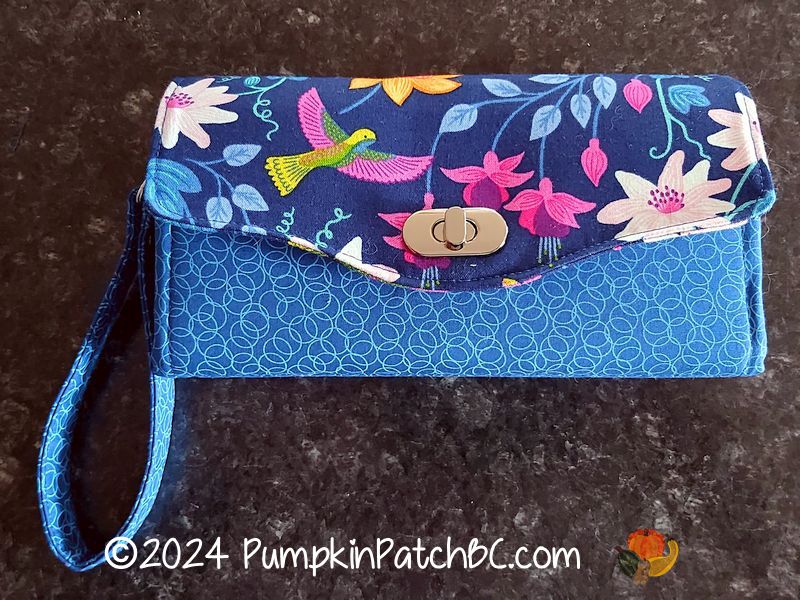
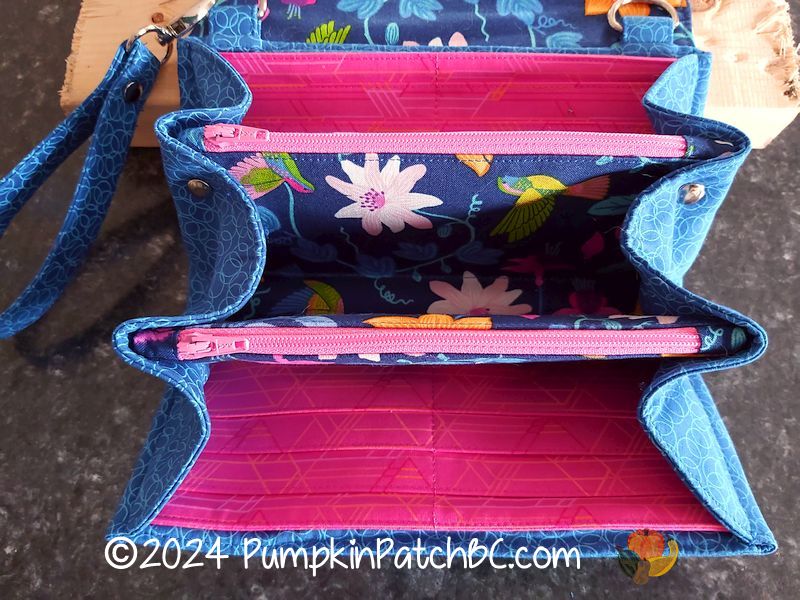
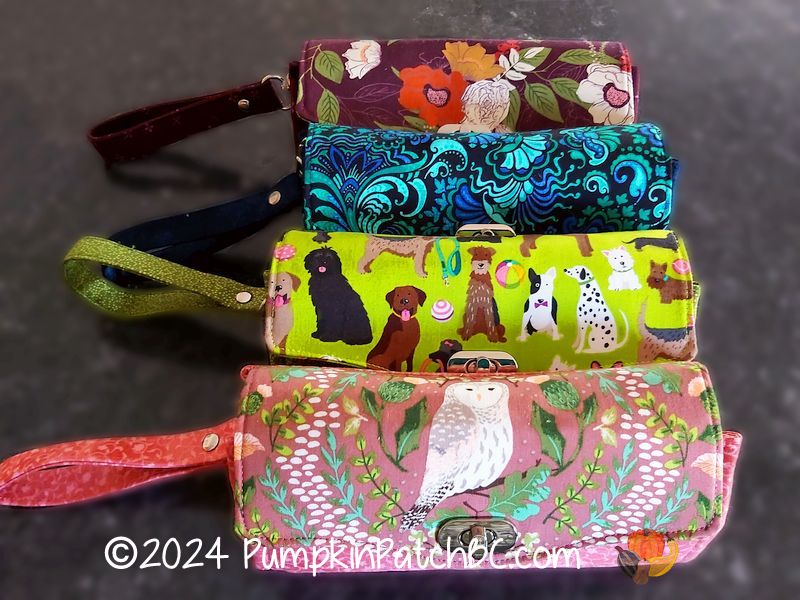
Have you ever heard of the “Necessary Clutch Wallet” (an Emmaline pattern)? I’m not sure where I first came across it, but I remember my friend Connie had made one, and I really liked it. Since I was already in bag-making mode, I decided to give the NCW pattern a try after finishing the travel bag sets. And wow, was it addictive! I made one for myself and then four more to give to friends and my mom. There’s a whole community out there hooked on making these clutch wallets, with excellent video tutorials, and I found it easy to follow along. Once I got the hang of it, I set up my own little assembly line and had them all done before leaving for Germany last year.

NCWs

During my 2023 trip, I realized the “Ultimate Travel Bag” was a bit too big for my liking. While it is the right size for airline carry-on luggage, I don’t usually bring that much with me on board, and I found it cumbersome to lug around. I had already bought another pattern, the “Executive Carryalls” (also By Annie), which are designed as laptop bags. The pattern has two options: a smaller laptop cover and a slightly larger bag with room for extra items. Since we had booked a trip to New Zealand for February 2024, I decided to make the bigger laptop bag to see if its size would work better as my carry-on. Once again, I had enough leftover fabric to make a matching “Easy Does It” bag.

By Annie Executive Carryall

By Annie Easy Does It

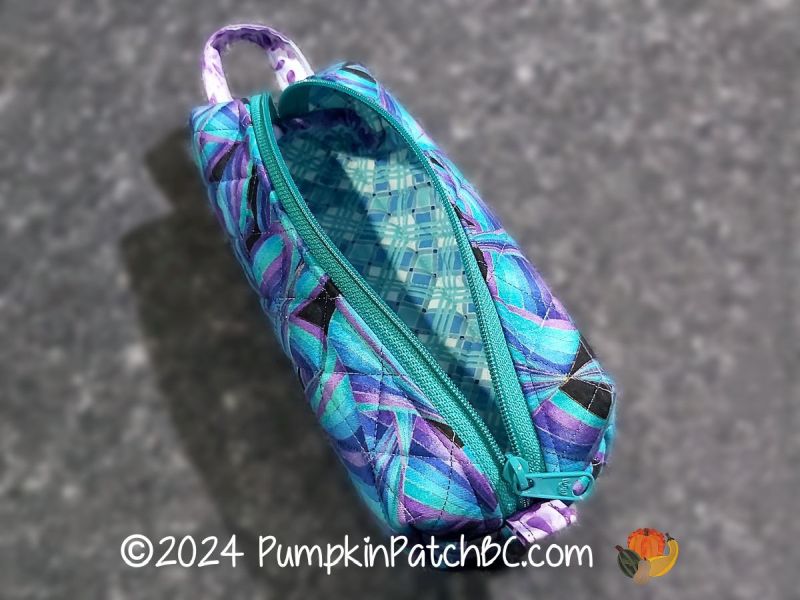
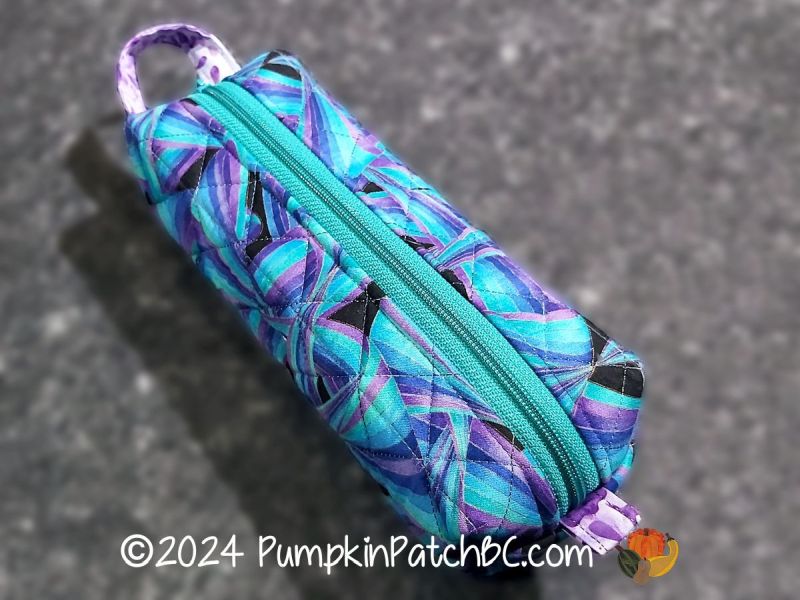
I also made the larger version of the Quick Zip Cases (another By Annie pattern). It was meant to be a quick Sunday afternoon project – though it took a bit longer since I put the zipper in the wrong way! But in the end, I was really happy with how it turned out.

My two “Easy Does It” bags, the Zip Case, and the Clutch Wallet all fit perfectly into the Executive Carryall, along with my glasses, phone, and the few other odds and ends I needed for the flight. I’m much happier with this smaller version of carry-on luggage.

Scroll to Top