


What Does That Even Mean
Meander, edge to edge pantograph, and custom quilting—do these terms confuse you? You’re not alone; many new quilters find these specialized terms challenging. There’s a lot to learn in the quilt-making process! Let’s take a closer look.
Meander Quilting
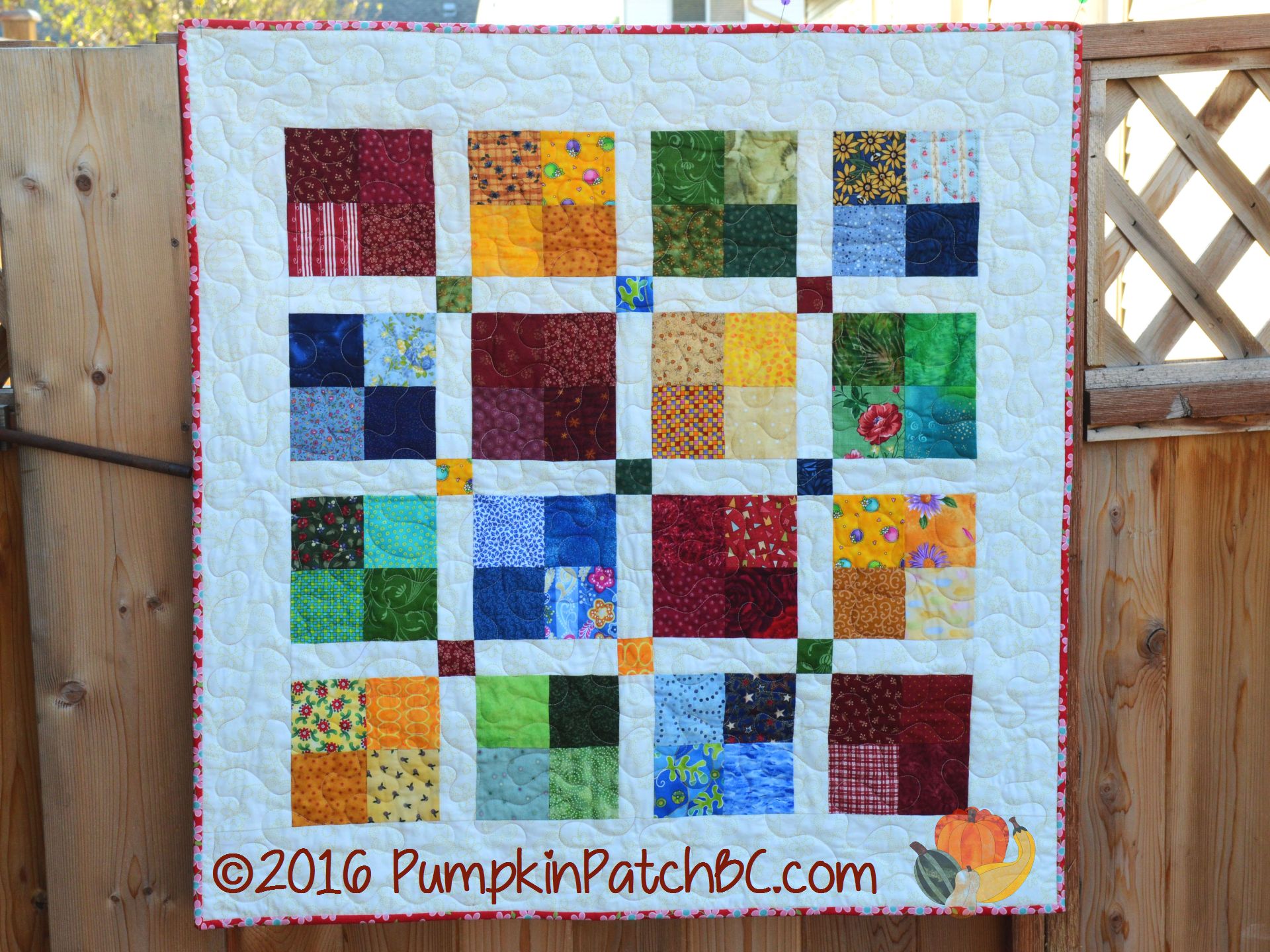
Large Allover Meander
Most quilters know the term “stippling,” and many have even tried to stipple on their domestic machines. Stippling is the all-over continuous free-motion pattern that resembles a jigsaw puzzle. It is a good way to practice your free-motion skills, but it can become tedious after a while. Nevertheless, it remains a timeless pattern that looks good when you want the quilting to stay in the background. So, what is the difference between stippling and meander? It’s just size that matters here. Stippling is small meandering, and there is no consensus on how small it needs to be to qualify as stippling. Many believe the lines can’t be more than 1/4″ apart, while others say that 1/2″ apart still qualifies. There’s an even smaller version called micro stippling, where the lines are no more than 1/8″ apart. But then again, who really cares about these definitions? Let’s just call it meandering, and we will be fine.
Meandering is done without any specific pattern; the only rule is that you can’t cross any lines. It takes some preparation to decide which way you want to go without maneuvering yourself into a corner. Additionally, you want your quilting to be smooth, with no corners or jagged lines. The scale of your meandering can be as large or as small as you wish. Larger meandering looks good as an allover design, while smaller stippling is often used as a background filler design.
Meander quilting also qualifies as an edge-to-edge design and is included in the lowest pricing category for edge-to-edge pantographs. Personally, I feel that meander quilting is not the best choice for most quilts, given the variety of designs available. There are exceptions, of course, but in the majority of cases, an allover abstract design will look better.
Edge to Edge Pantographs
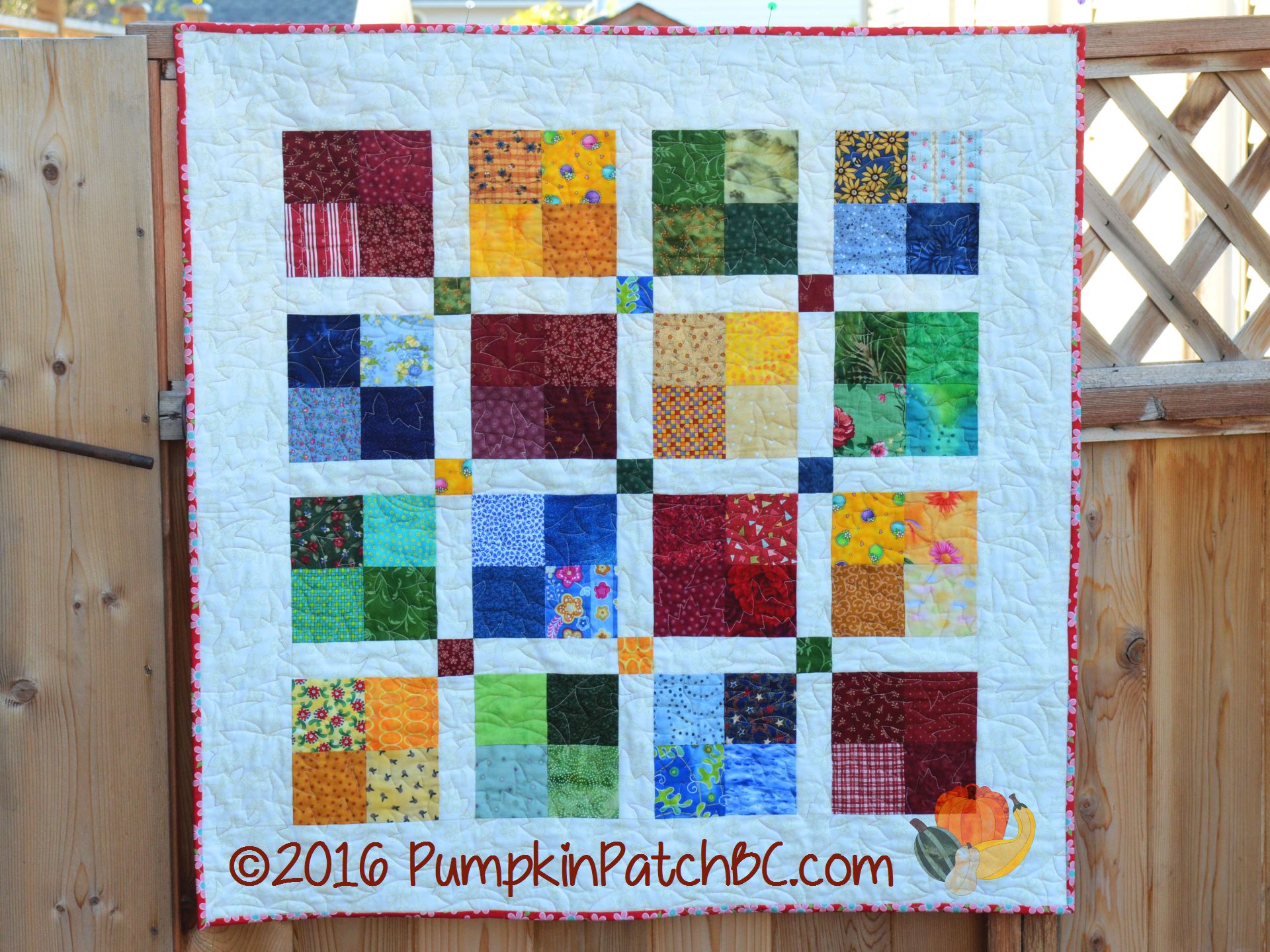
Maple Sugar Pantograph
Pantographs are continuous line quilting designs stitched across the quilt top, regardless of any piecing, appliqué, or embroidery. A pantograph design covers the entire quilt from side to side and top to bottom. There are many designs available, ranging from specific patterns to more general ones, including swirls, flames, feathers, puppy paws, teddy bears, and seasonal motifs like holly leaves, hearts, candy corn, and decorated eggs. If you can imagine it, someone has likely created a design for it.
Pantographs are usually meant to complement the quilt but stay in the background. They mostly go well with pieced quilts but can be difficult to use with appliquéd or embroidered blocks. It all depends on the result you want to achieve, and I will be happy to help you choose what is right for your quilt. I have overlays available of all the pantograph designs I have, and we can audition the ones you like and see which one would look best on your quilt. It is always good to have several designs in mind to choose from as they don’t always look the way you think they will look. I am now using digital overlays. To see an example of how I audition pantographs, click here.
Custom Quilting
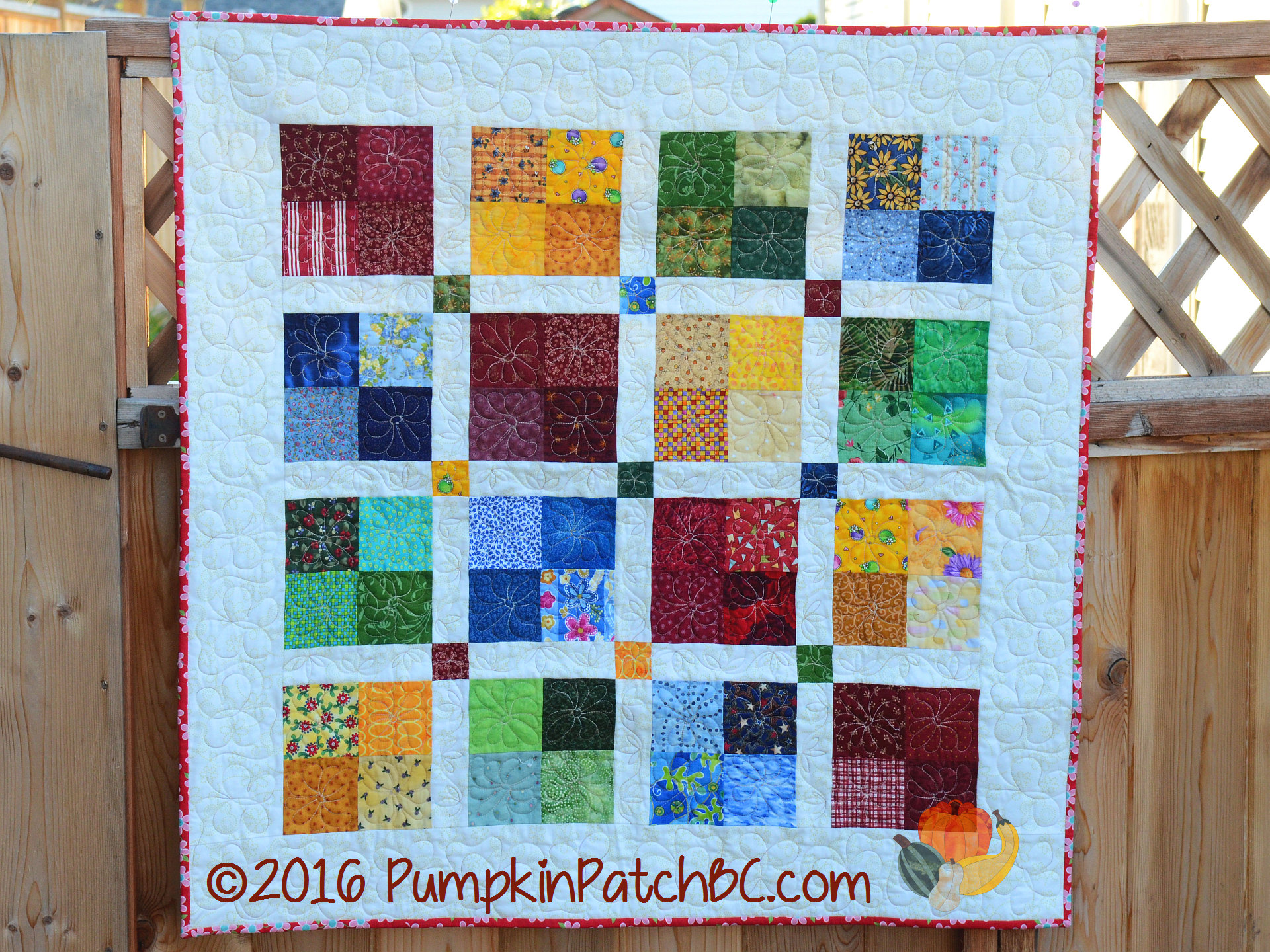
Custom Quilting
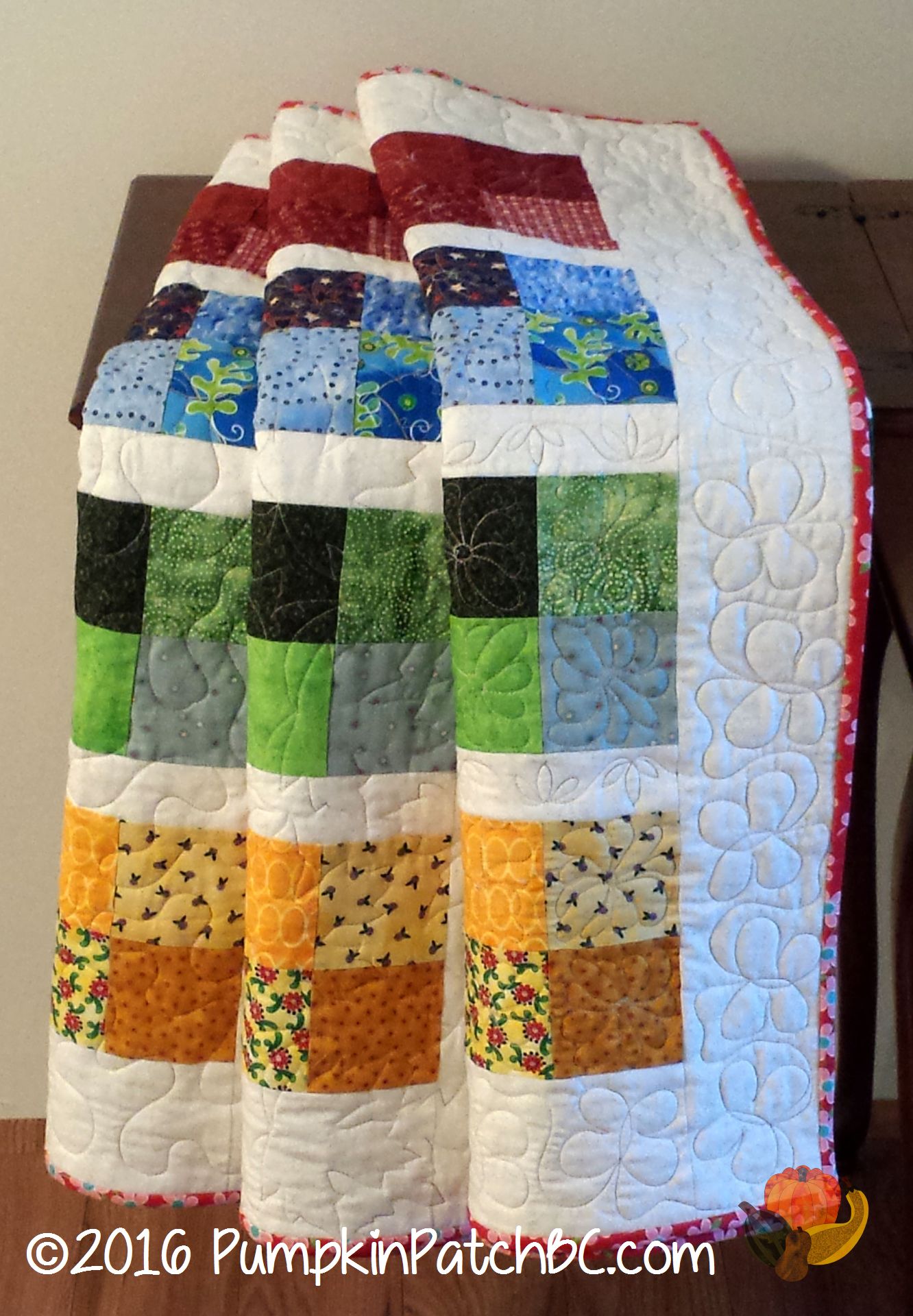
Custom quilting is perhaps the most challenging style to describe, as it encompasses a wide range of options. Essentially, anything that isn’t an allover design falls under custom quilting. This could be as simple as selecting an edge-to-edge pantograph design for the quilt body while choosing a different design for the border, or as intricate as heavily quilting each area of the quilt differently. Custom quilting pays close attention to the quilt top’s design elements. For example, in my sample, I used various designs for the blocks, sashing, cornerstones, and borders. This technique involves free motion quilting without adhering to a specific pattern, resulting in unique designs that add interest and prevent a generic appearance. Custom quilting requires more time than allover designs, and as a result, it is generally more expensive.
More questions?
Contact me, and I will be happy to answer them.